By Dr Goran D. Stojanovic, ndu Clinic
At ndu Clinic, we believe successful dental treatment begins with more than looking at the tooth. The body's ability to heal matters too, and one key factor is vitamin D. Here we look at what the research says about vitamin D and dental implants, and why we may check your levels before surgery.
In brief
Vitamin D supports immune function, inflammation control, bone metabolism and normal tissue healing.
Several systematic reviews link vitamin D deficiency with poorer implant healing, particularly early implant failure.
The evidence is still developing, and vitamin D is only one of many factors that affect your outcome.
For some surgical and regenerative procedures, we may recommend a simple blood test beforehand.
Why vitamin D matters for healing
Vitamin D plays a role throughout the body, including in immune function, inflammation regulation, bone metabolism and normal tissue healing. These processes become especially relevant when the body needs to recover after dental surgery, bone grafting or dental implant placement.
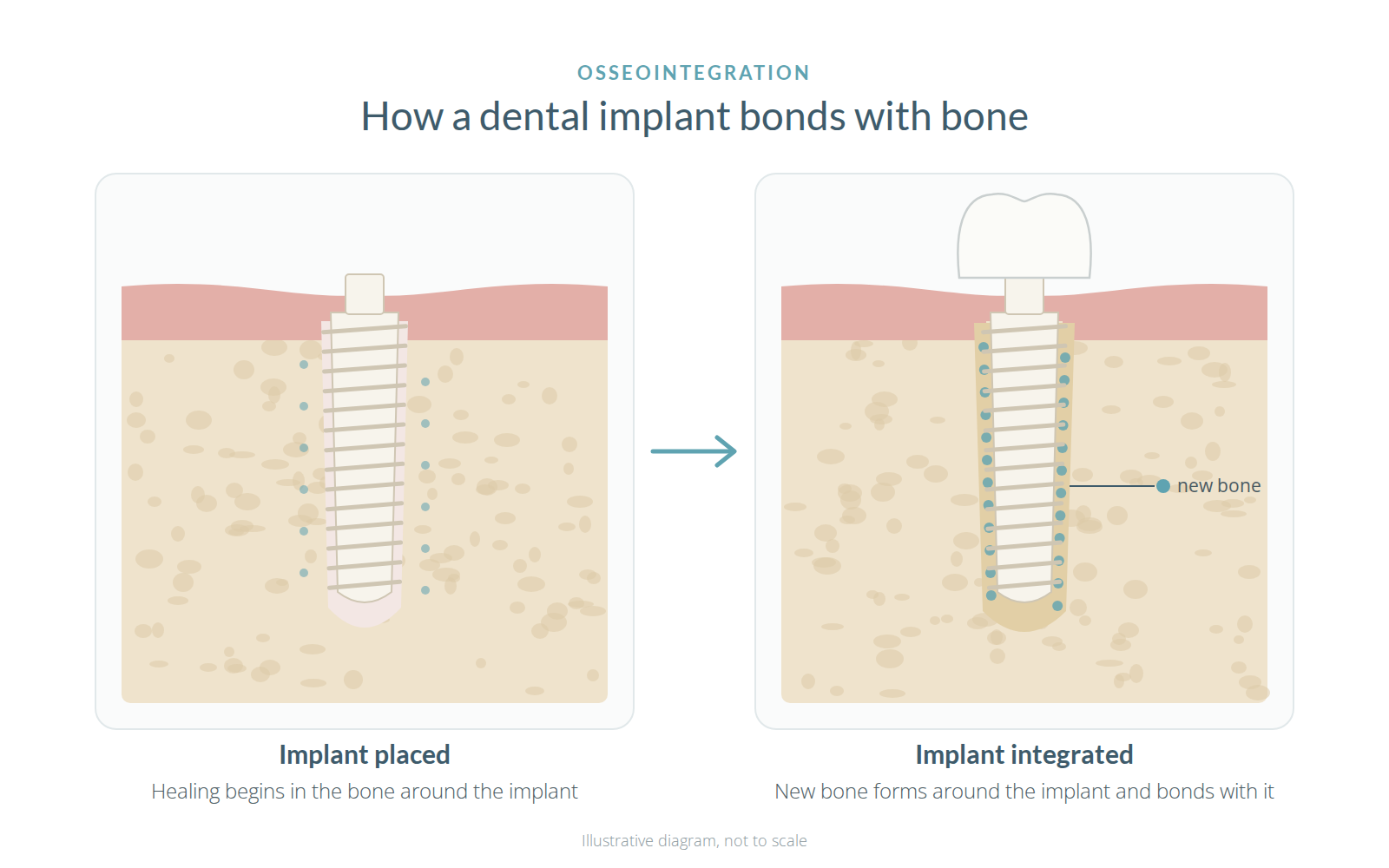
For dental implants, successful healing depends on osseointegration. This is the biological process through which new bone forms around the implant and bonds with it.
Vitamin D and dental implants: what the research says
Researchers have increasingly examined whether low vitamin D levels affect osseointegration. Several systematic reviews have reported an association between vitamin D deficiency and poorer implant healing, particularly early implant failure (1–3). A 2025 review in Periodontology 2000 found that most of the human studies it included supported this link, and it recommended screening before surgery (1).
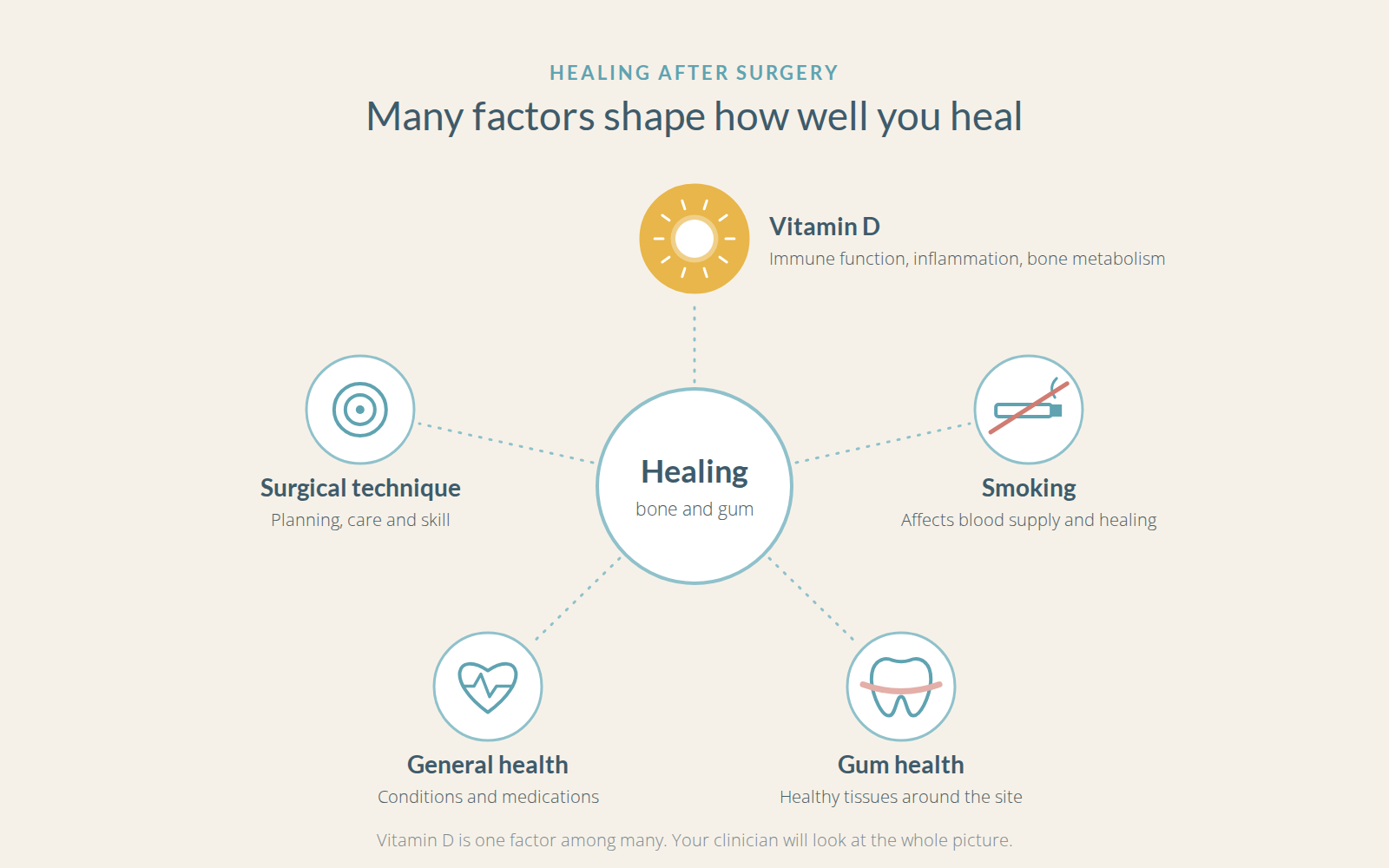
However, the evidence is still developing. Many studies are small or retrospective, and some reviews have found inconsistent results (4). Vitamin D is only one of many factors that influence treatment outcomes, alongside smoking, gum health, general health and surgical technique.
Looking beyond the mouth
Clinicians and researchers have increasingly drawn attention to the link between general health and surgical healing. Dr Joseph Choukroun has described low vitamin D as an often-overlooked biological risk factor in bone grafting and implantology (5). We wrote about the other factor in that paper in our post on LDL cholesterol and bone healing. Prof Shahram Ghanaati's research on tissue regeneration also emphasises the role of the patient's own biology in healing.
Why we may test vitamin D before treatment
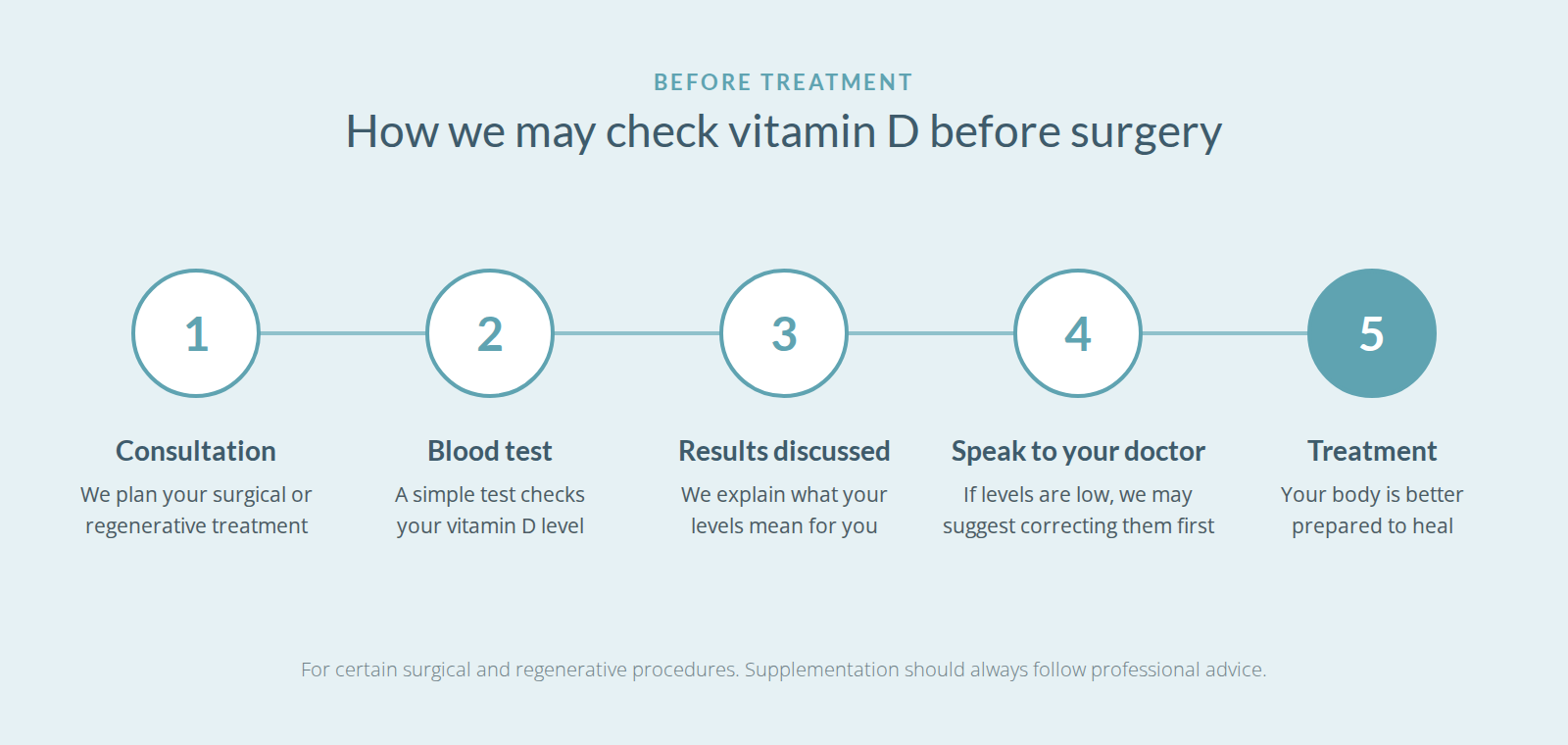
For certain surgical and regenerative procedures, we may recommend checking vitamin D as part of your pre-treatment assessment.
A simple blood test can identify a deficiency or insufficiency before treatment. If your levels are low, we will discuss this with you. Where appropriate, we will recommend that you speak with your doctor or healthcare professional about correcting it before surgery.
Where does vitamin D come from?
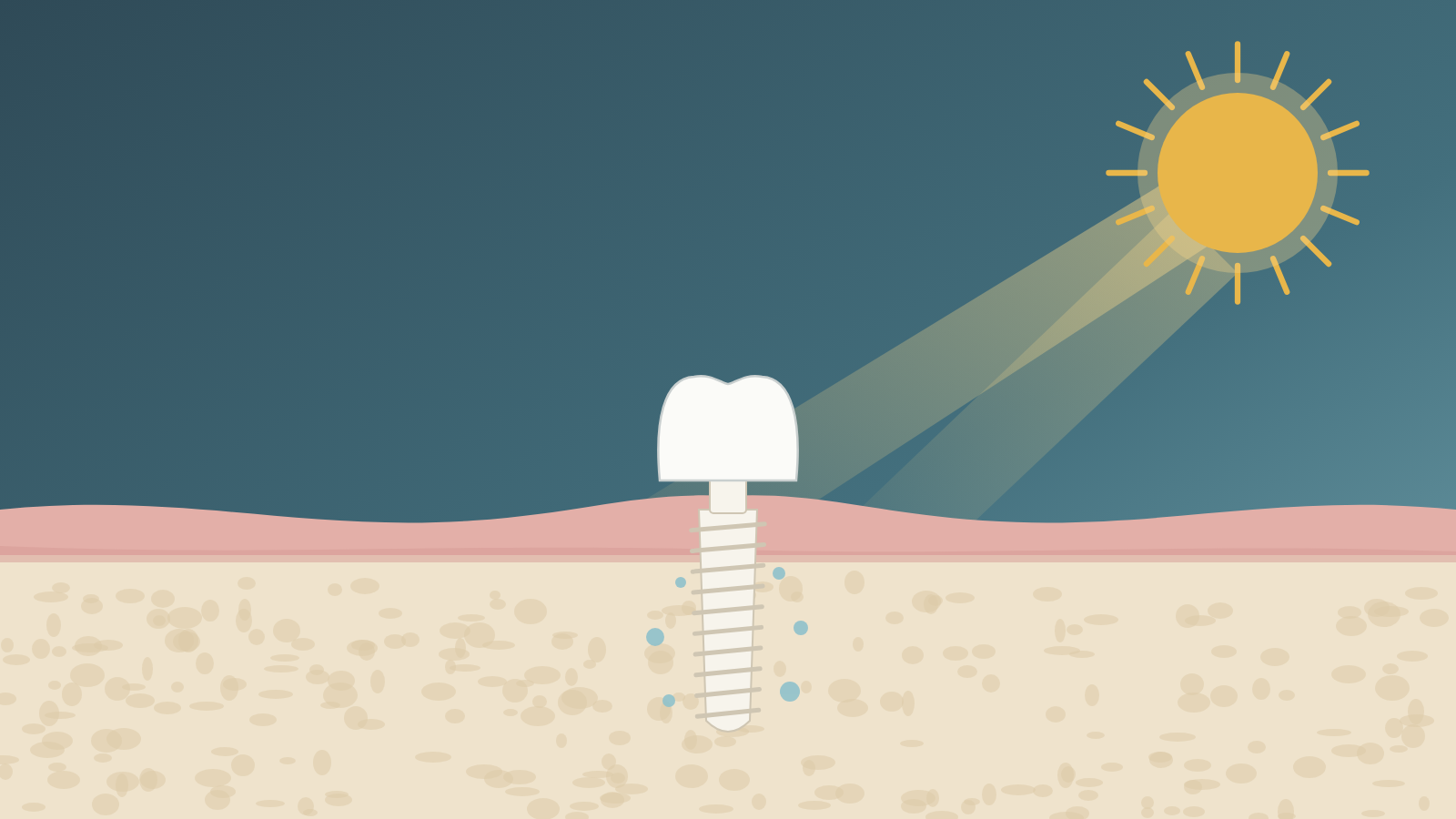
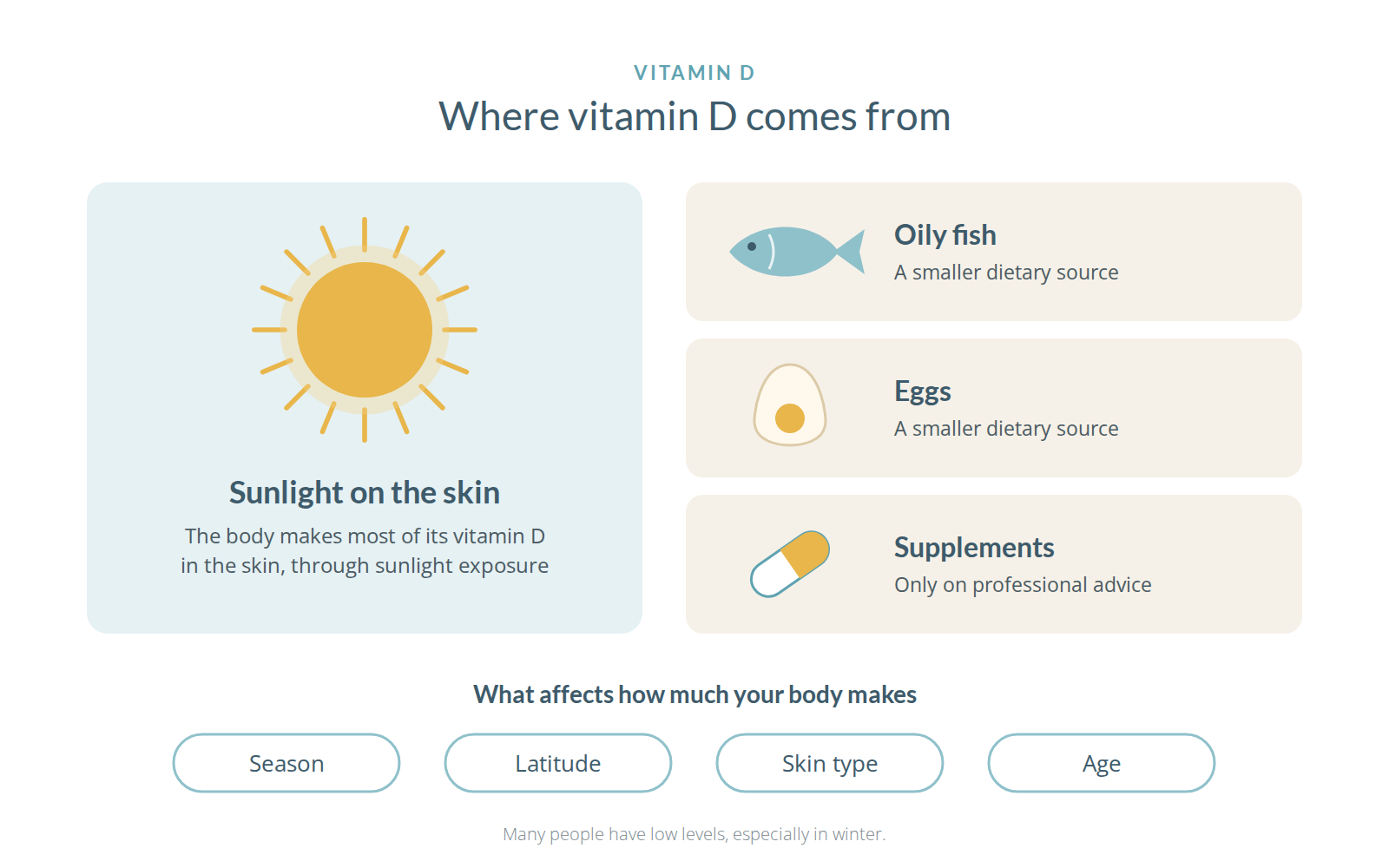
Most vitamin D is made in the skin through sunlight exposure. Smaller amounts come from foods such as oily fish and eggs. Season, latitude, skin type and age all affect how much the body produces, which is why many people have low levels, especially in winter. Supplements may be recommended where needed, always based on professional advice.
Our philosophy
Don't only prepare the surgical site. Prepare the person who has to heal it.
Biological dentistry is not about treating teeth in isolation. It is about recognising the connection between oral health, general health and the body's capacity to heal.
Frequently asked questions
Does low vitamin D cause dental implants to fail?
Research has found an association between vitamin D deficiency and early implant failure, but it has not shown that low vitamin D causes failure on its own. Many factors affect healing, including smoking, gum health, general health and surgical technique.
Will I need a vitamin D test before my implant?
Not always. For certain surgical and regenerative procedures, we may recommend a simple blood test as part of your pre-treatment assessment.
Should I start taking vitamin D before surgery?
Only on professional advice. If your levels are low, we will discuss this with you and may suggest you speak with your doctor about correcting them before surgery.
Planning implant treatment?
If you are considering dental implants or bone grafting, contact us or call 020 7935 5281 to book a consultation. You can also read more about Dr Goran D. Stojanovic.
ndu Clinic, Centre for Biological Dentistry. This information is educational and does not replace individual medical advice. Vitamin D supplementation should be based on individual circumstances and appropriate professional guidance.
References
Miron RJ et al. Relationship between vitamin D deficiency and early implant failure and osseointegration. Periodontol 2000. 2025. doi:10.1111/prd.70017
Buzatu BLR et al. Impact of vitamin D on osseointegration in dental implants: a systematic review of human studies. Nutrients. 2024;16(2):209. doi:10.3390/nu16020209
Werny JG et al. Does vitamin D have an effect on osseointegration of dental implants? A systematic review. Int J Implant Dent. 2022;8(1):16. doi:10.1186/s40729-022-00414-6
Alsulaimani L et al. The relationship between low serum vitamin D level and early dental implant failure: a systematic review. Cureus. 2022;14(1):e21264. doi:10.7759/cureus.21264
Choukroun J et al. Two neglected biologic risk factors in bone grafting and implantology: high low-density lipoprotein cholesterol and low serum vitamin D. J Oral Implantol. 2014;40(1):110–4. doi:10.1563/AAID-JOI-D-13-00062
References retrieved from PubMed.